One thread. Different worlds.
A deliberately low-resolution creative video prototype connecting water, sport, couture, racing, machinery, and a waterfront city. It is an original studio experiment made to test the story, sound, motion, experience, and potential ROI of an idea before investing in final polish.
The idea
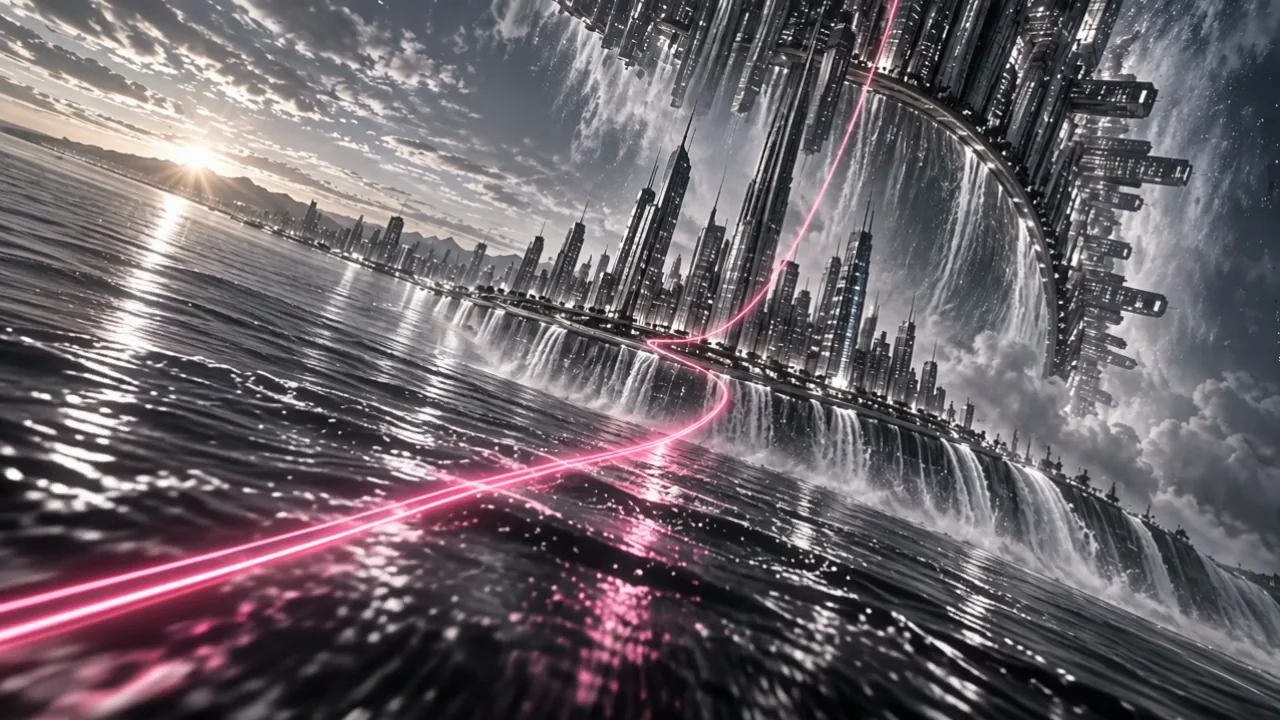
The starting idea was to move through very different environments without losing the feeling of one connected world. The production prompts set a clear constraint: silver, charcoal, and black, with hot pink as the continuous thread. Forward movement and reflective surfaces would carry that thread from one scene into the next.
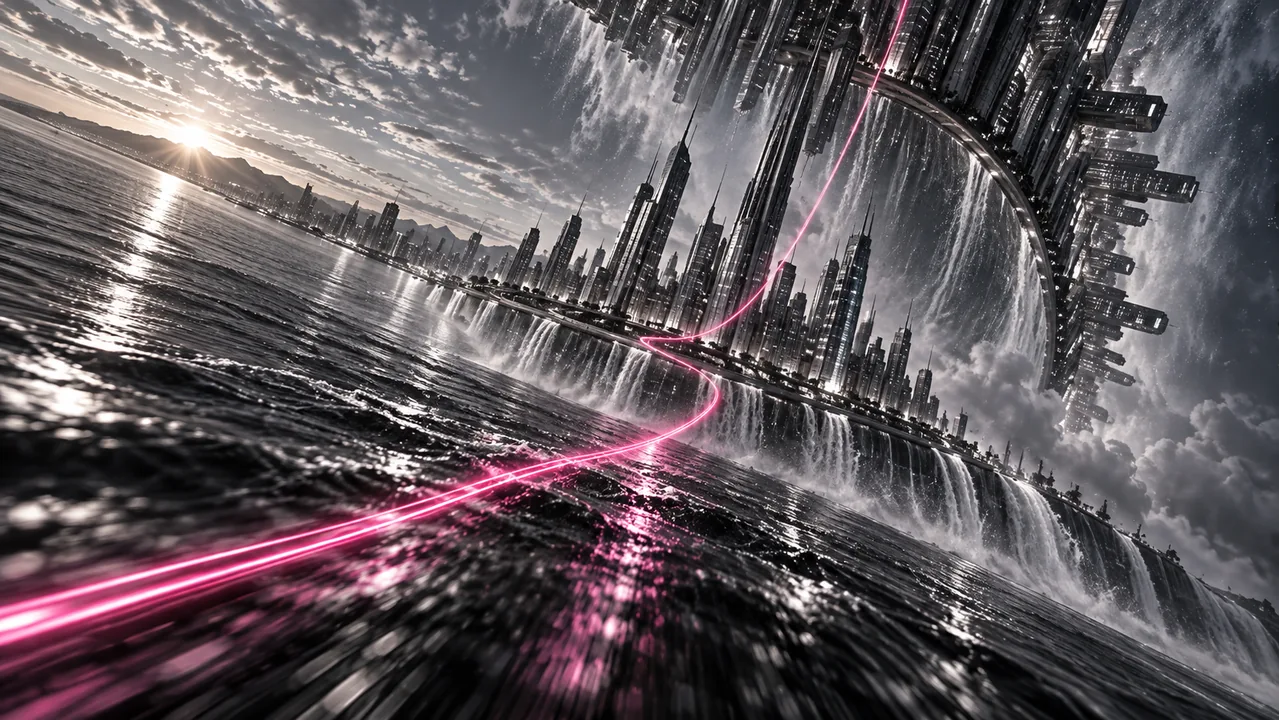
In the finished film, that line changes character: a trail across water, a ribbon in a dress, a racing line, then airflow. Some of the most interesting moments happen at the handoff.
The pieces
Three small studies from the larger sequence. These are the actual image references, generated source clips, and selected sound studies; the film above shows how the pieces sit inside the finished edit.
Water, then impact.
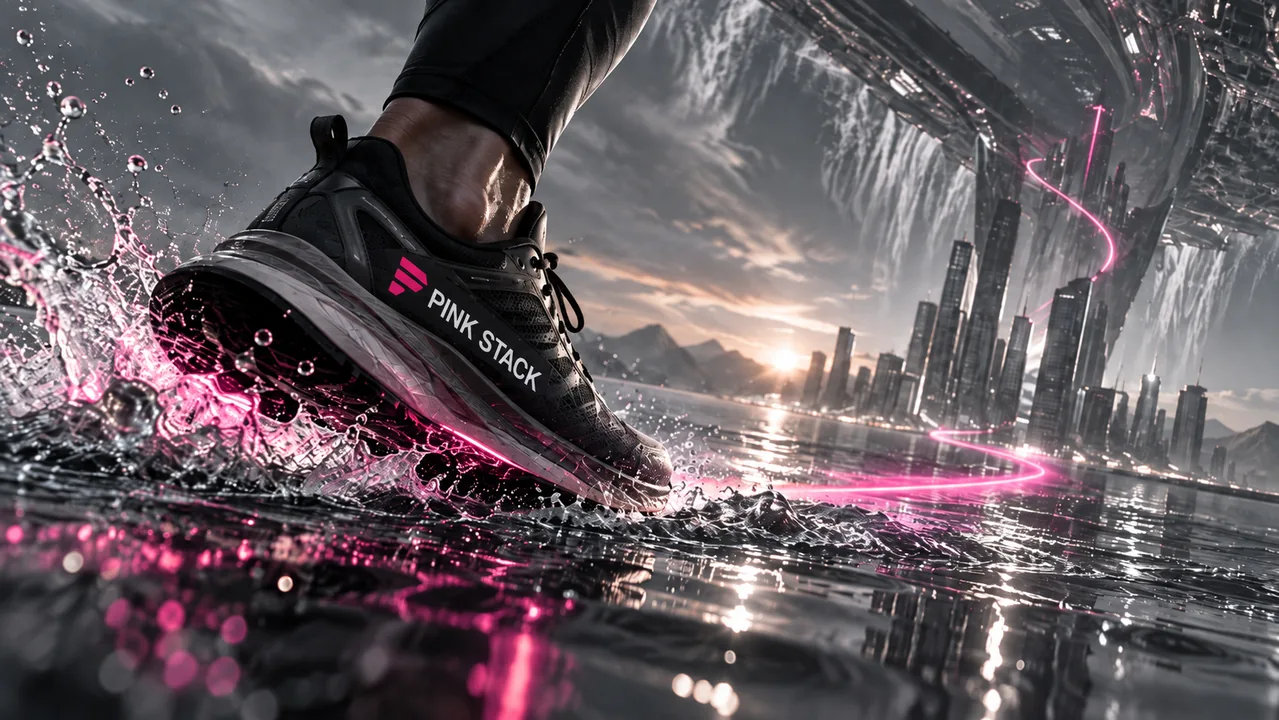
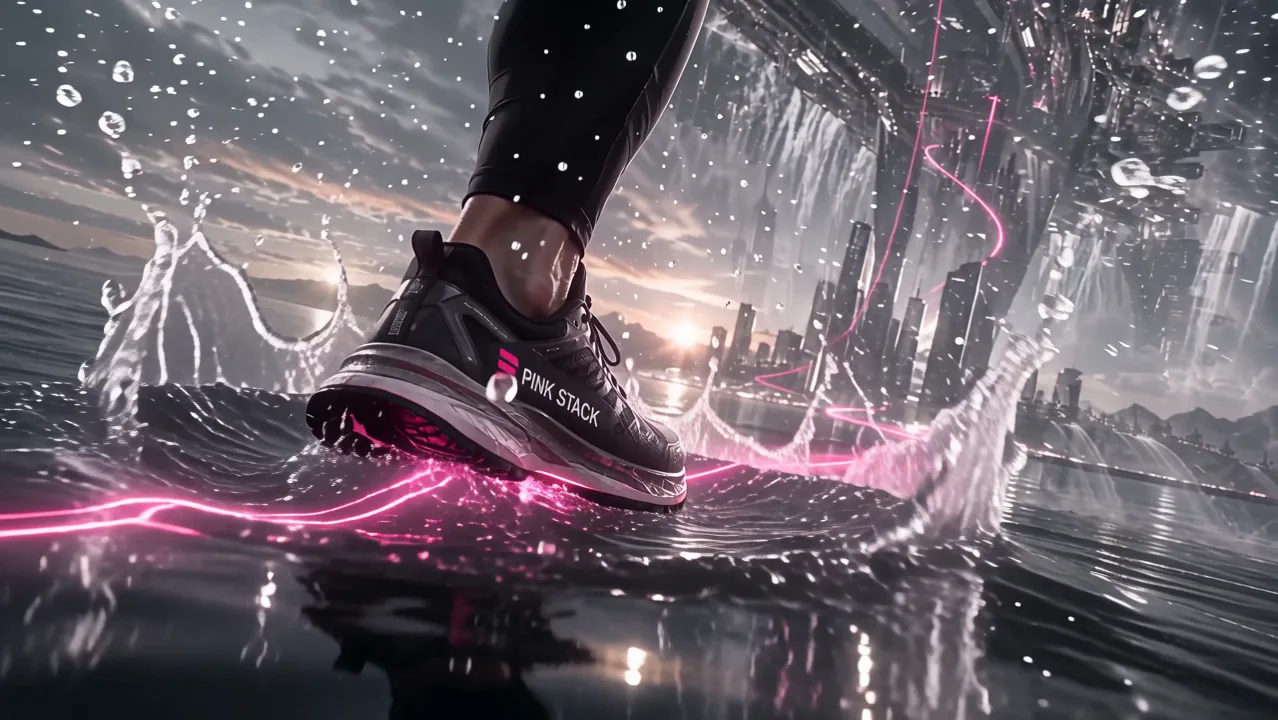
The opening generated bridge moves from a folded city into the shoe's contact with water. This source clip has no audio.
The opening prompt asks for a heel-first landing, sole compression, and a forward push through the splash. The target still gives the bridge somewhere specific to arrive.
A line becomes fabric.
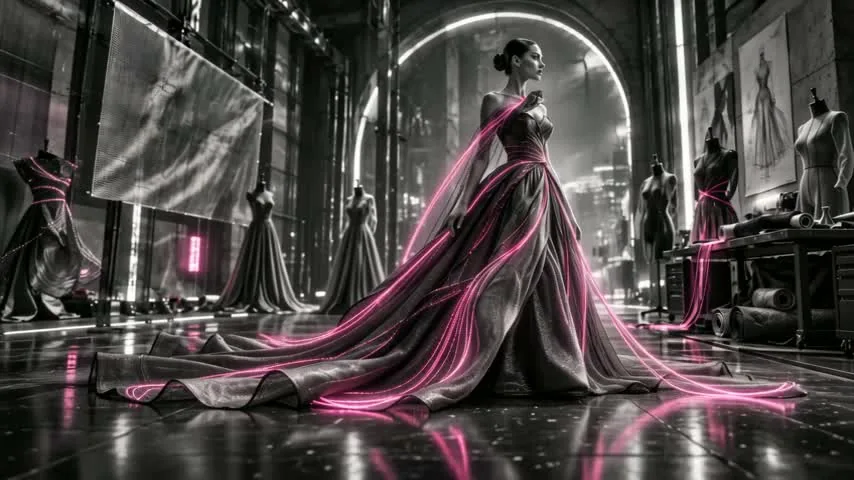
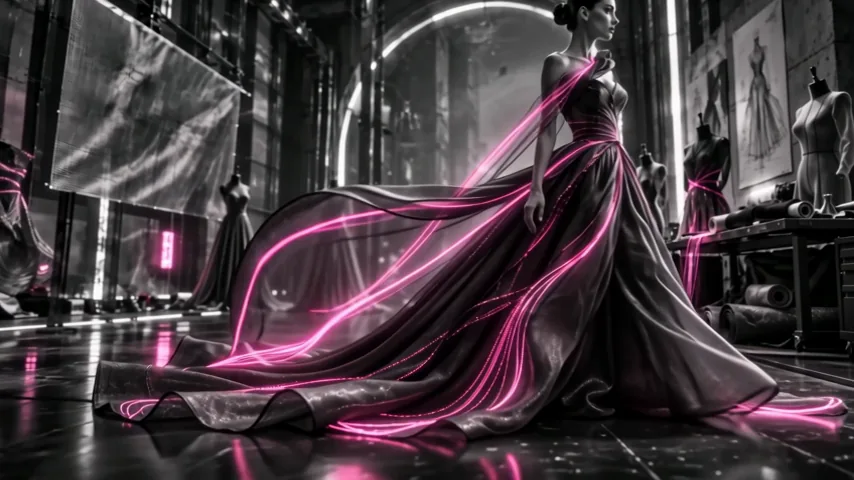
The couture figure turns as luminous pink ribbons and reflective fabric move through the studio. This source clip has no audio.
The first frame and the original three-second scene. The transition notes carry the pink line into couture ribbons, then stretch those ribbons into the racing line for the next environment.
Let the world turn.
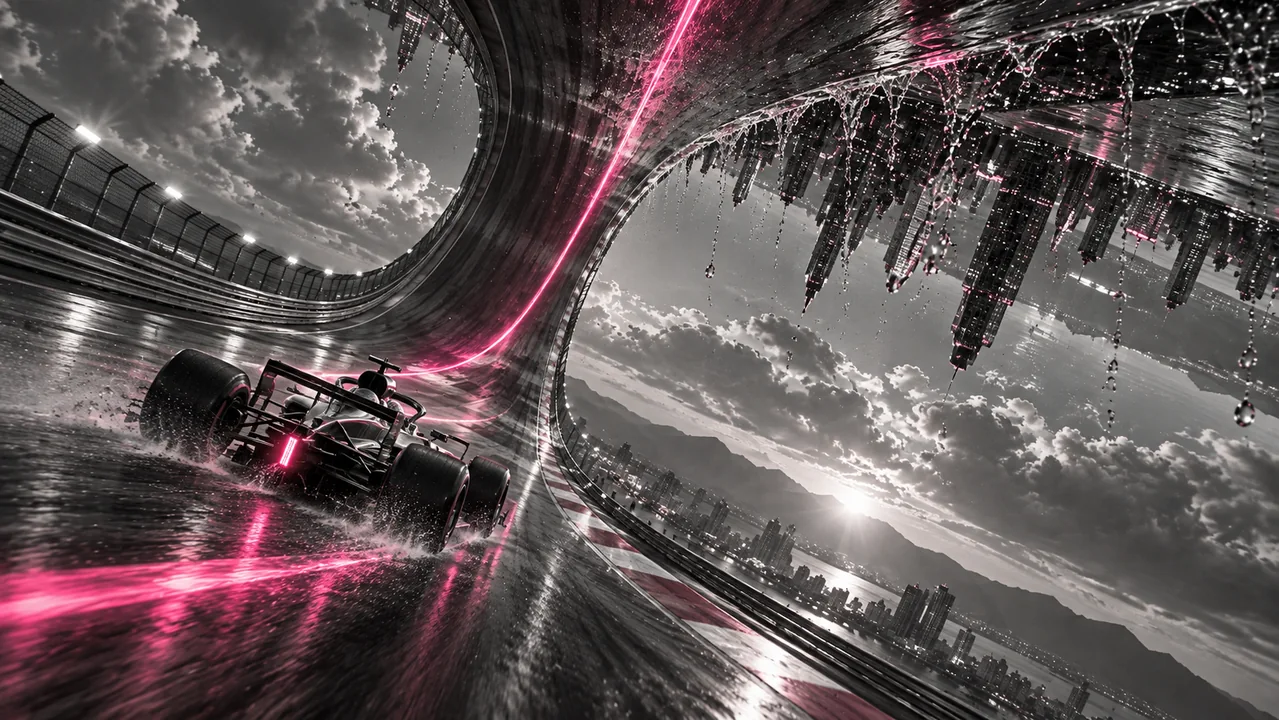
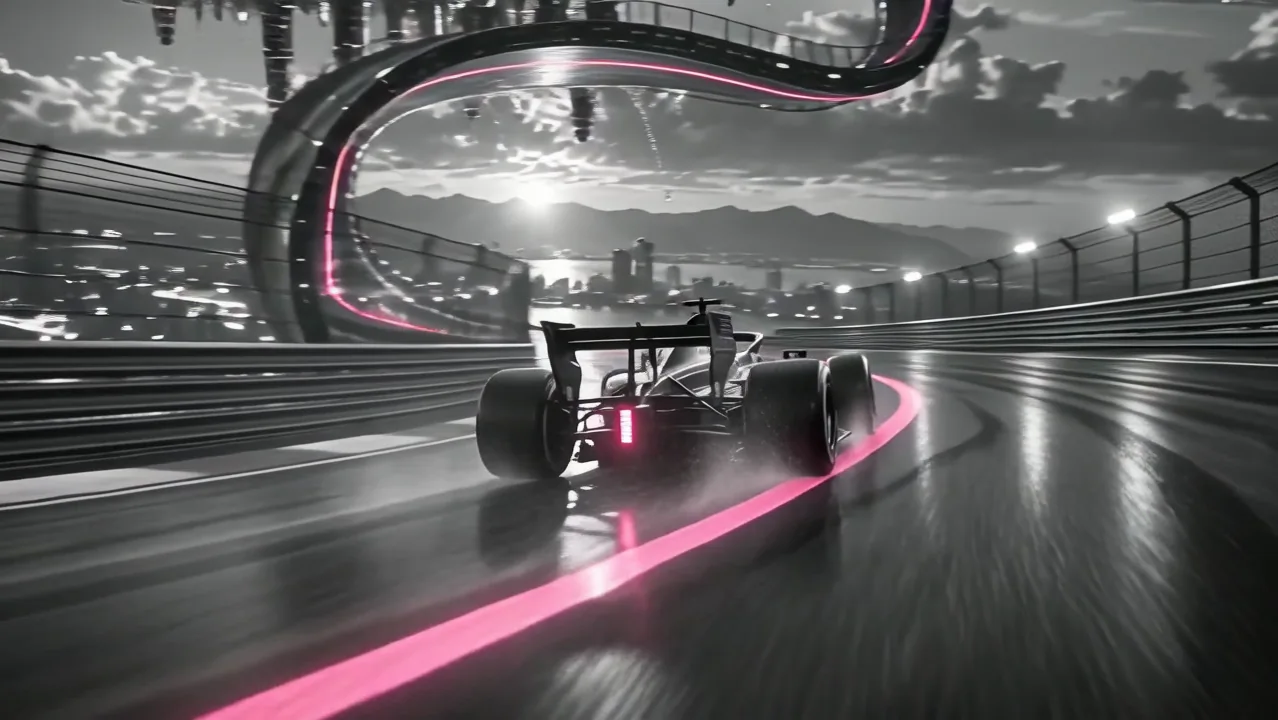
A generated raceway transition explores the forward car movement and turn into an inverted road. This source clip has no audio.
The H1 reference sets the inverted destination. This fourth generated iteration explores the pass and camera turn described in the production notes. It is a source iteration, not an excerpt from the finished film.
Putting it together
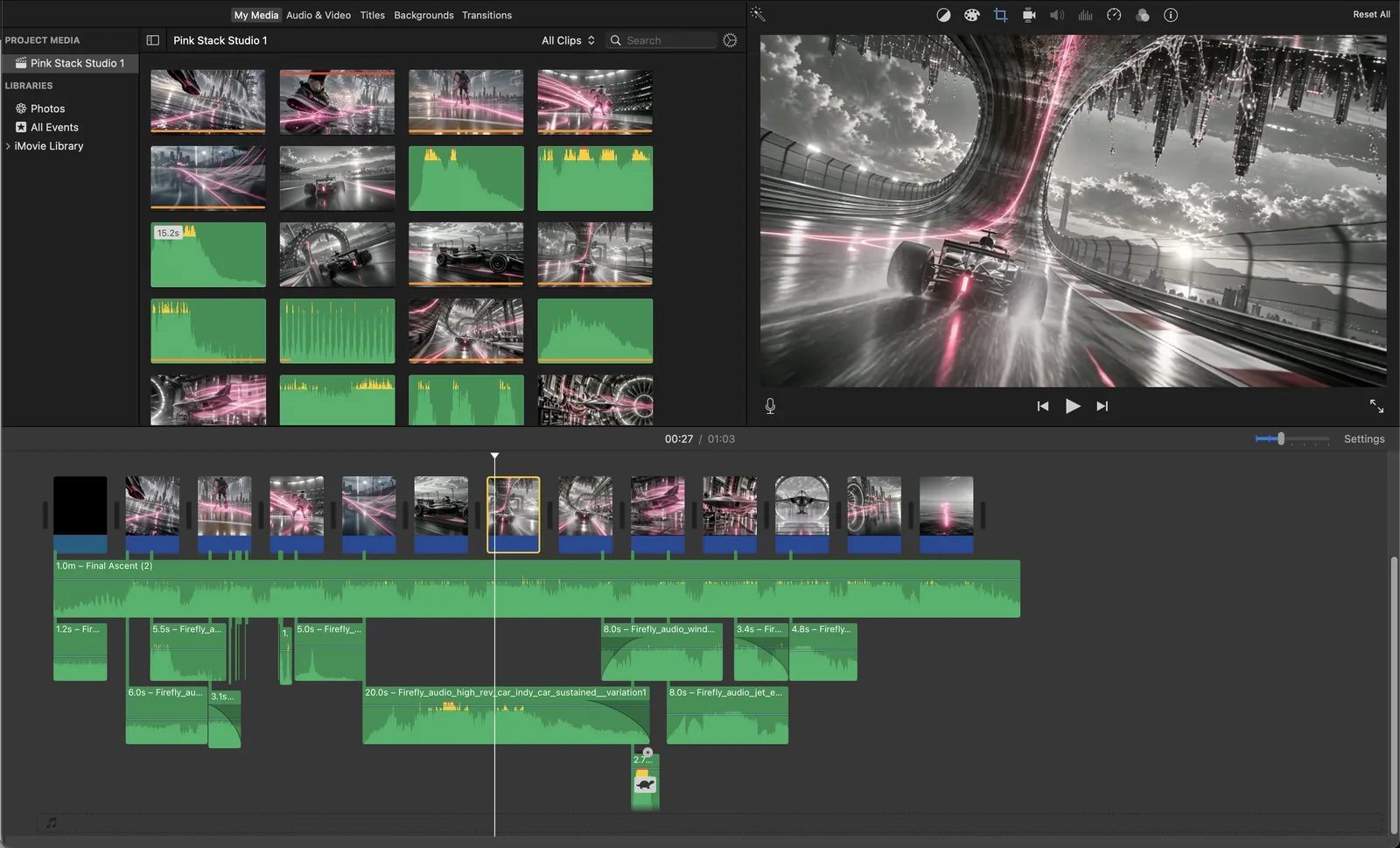
I used AI-assisted image and video generation to explore the worlds and the movement between them. The work was in choosing the references, describing the motion, checking what actually came back, and deciding what could connect. The edit plan keeps the original scene clips separate from the generated bridges.
One useful correction appears directly in the transition notes: use the actual final frame of the previous clip as the next starting reference. For the raceway turn, the prompt specifies a visible forward pass before the camera follows the car into the inverted road. Those are concrete continuity decisions, not just requests for a more cinematic result.
“The six source videos remain unchanged. Pika supplies the bridges between them, with H1-H4 as approved hinge stills for the gravity-turn sections.”
folded city → Pink Stack shoe → clean basketball
→ fashion → Indy car → inverted raceway
→ automotive factory → wind mill
→ aircraft/fabric → wind tunnel
→ waterfront city → cityscapeOne scene, in context.
The couture figure turns as luminous pink ribbons and reflective fabric move through the studio. This source clip has no audio.
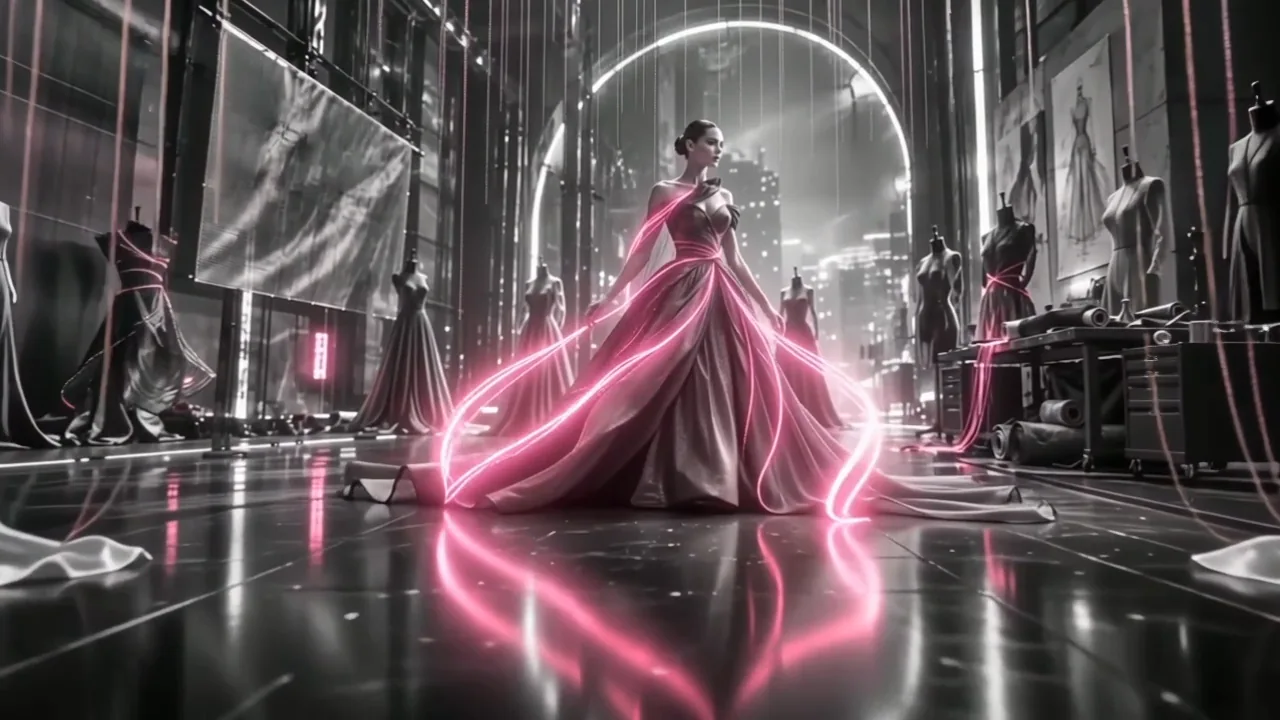
The couture scene as it appears in the finished film, including its mixed soundtrack. Excerpt from 13.6 to 16.6 seconds.
The original scene is shown alongside a short excerpt from the finished film. The final excerpt includes the full mix at that moment; its audio is not an isolated sound effect or stem.
Design, engineering, and the customer journey
Creative video can earn someone's interest. Experience design gives them a way to explore or act. The engineering underneath can carry that intent into a useful next step. That is the work Pink Stack Studio is here to explore.
A closing note
This is an experiment I'm opening up: the finished minute, the pieces behind it, and the decisions that connect them. Pink Stack Studio is a creative solo practice built around creative video and experience design.
Jake Miller / Pink Stack Studio